
OR

Virtual Staging vs. Traditional Home Staging: Which Is Better for Realtors?
When you list a property, you have one major job: help potential buyers imagine themselves living there.
But what happens when the home is empty, outdated, or filled with furniture that does not match your target market? Even a beautiful property can struggle to make an impact if buyers cannot visualize its potential.
That is where home staging comes in.
You generally have two options: virtual staging and traditional home staging. Both can improve how you present a property, but they work in very different ways.
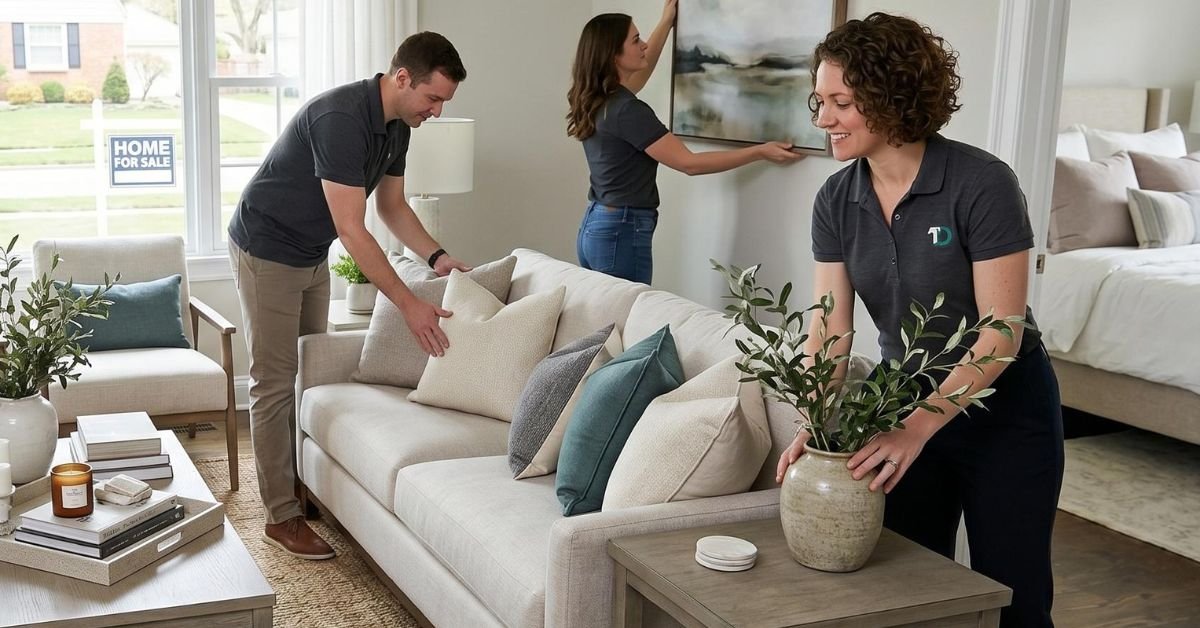
Traditional staging brings real furniture and accessories into a home. Virtual staging uses digital technology to add furniture, décor, and design elements to property photographs.
So, which option should you choose as a realtor?
The answer depends on your budget, timeline, property type, marketing strategy, and the experience you want to create for buyers. Let’s compare both approaches so you can make a practical decision.
What Is Virtual Staging?
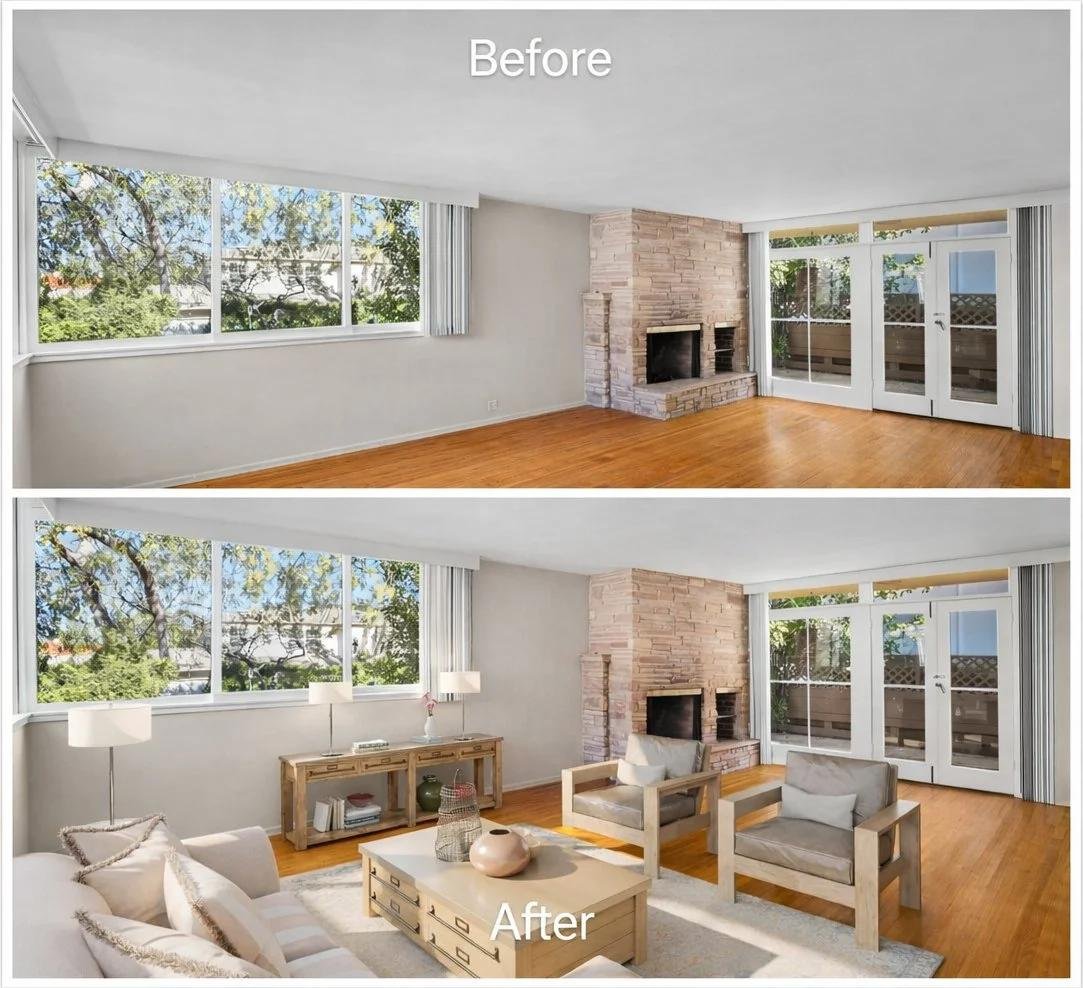
Virtual staging is the process of digitally furnishing and decorating a property photograph. Using specialized software or artificial intelligence, you can add sofas, beds, dining tables, artwork, rugs, lighting, and other design elements to an empty or poorly furnished room.
The original photograph remains the foundation. The goal is to make the space look inviting while preserving its actual architecture and layout.
How Does Virtual Staging Work?
The process usually follows these steps:
-
You take professional photographs of the property.
-
You select the rooms you want to stage.
-
You choose a design style, such as modern, Scandinavian, traditional, or luxury.
-
A virtual staging provider adds digital furniture and décor.
-
You review the images and request revisions if necessary.
-
You use the finished photographs in your online marketing.
For example, an empty 12-by-15-foot living room may look cold and uninviting in a listing photo. Virtual staging can add a properly scaled sofa, coffee table, area rug, artwork, and accent chairs to show buyers how the room could function.
Where Can You Use Virtual Staging?
Virtual staging works especially well for:
-
Empty homes and condominiums
-
New construction properties
-
Investment properties
-
Fixer-uppers
-
Model homes
-
Rooms with outdated furniture
-
Online listings and social media campaigns
You can also create several versions of the same room. One version might use a contemporary design, while another uses a warm transitional style.
This flexibility helps you market the same property to different buyer groups without physically moving furniture.
What Is Traditional Home Staging?
Traditional home staging involves placing actual furniture, accessories, artwork, lighting, and other decorative items inside a property.
A professional stager visits the home, evaluates the space, recommends improvements, and arranges furnishings to create a more attractive environment for potential buyers.

How Does Traditional Staging Work?
A traditional staging project may include:
-
An initial property consultation
-
Furniture selection and delivery
-
Room layout and styling
-
Accessory placement
-
Lighting recommendations
-
Furniture removal after the listing period
The stager may use rental furniture or pieces from an existing inventory. The goal is to make the property feel comfortable, balanced, and ready for showings.
Why Do Buyers Appreciate Physical Staging?
When buyers walk into a physically staged home, they can experience the space directly.
They can see how much room exists between the sofa and the coffee table. They can sit on a chair, walk around a dining table, and understand the size of a bedroom.
Traditional staging creates a physical experience that photographs alone cannot fully reproduce.
However, physical staging also requires more planning, transportation, storage, and coordination.
Virtual Staging vs. Traditional Staging: Key Differences
Both methods aim to improve a property’s presentation, but their practical advantages differ.
|
Factor |
Virtual Staging |
Traditional Staging |
|---|---|---|
|
Furniture |
Digitally added |
Physically installed |
|
Setup time |
Often relatively quick |
Requires delivery and installation |
|
Cost structure |
Usually charged per image or room |
Often includes rental and service fees |
|
Buyer experience |
Primarily online visualization |
In-person and online experience |
|
Flexibility |
Easy to change styles digitally |
Requires physical rearrangement |
|
Vacant homes |
Particularly useful |
Creates a furnished viewing experience |
|
Open houses |
Cannot furnish the physical property |
Furnishes the actual property |
|
Design variations |
Multiple versions are possible |
Usually one physical arrangement |
|
Logistics |
Minimal physical coordination |
Delivery, pickup, access, and storage |
Think of virtual staging as a digital showroom. You can change the furniture and design without changing the physical room.
Traditional staging is more like preparing a theater before the audience arrives. The set exists in the real space, and visitors experience it directly.
Which Option Costs Less?
In many situations, virtual staging costs less than traditional staging, especially when you need to furnish several rooms or market a vacant property over an extended period.
However, pricing varies by provider, property size, number of rooms, furniture quality, location, and rental duration.
Understanding Virtual Staging Costs
Virtual staging providers may charge per photograph, per room, or according to a package.
For example, imagine you need to stage five photographs at an illustrative price of $40 per image:
-
Five images × $40 = $200
-
Additional revisions or advanced editing may cost extra.
This is only an example, not a universal market rate. You should request a detailed quote before choosing a provider.
Understanding Traditional Staging Costs
Traditional staging may include:
-
Consultation fees
-
Furniture rental
-
Delivery and pickup
-
Installation and styling
-
Monthly rental extensions
-
Damage or replacement charges
For example, if physical staging costs $2,000 for an initial month and the property remains on the market for three months, the total cost could increase significantly through rental extensions.
The important question is not simply, “Which option is cheaper?”
Ask yourself:
Will the staging investment help me present the property more effectively to the buyers I want to reach?
A higher-cost approach may make sense for a luxury property that receives many in-person showings. A lower-cost digital solution may be more practical for an investment property marketed primarily online.
Which Staging Option Is Faster?
If you need to launch a listing quickly, virtual staging often offers a shorter preparation process.
Once you have suitable photographs, a provider can usually create staged images without scheduling furniture delivery or coordinating access to the property.
Traditional staging requires more steps:
-
Schedule a consultation.
-
Select furniture and accessories.
-
Arrange delivery.
-
Prepare the property.
-
Install the furniture.
-
Photograph the staged rooms.
The exact timeline depends on availability and property requirements.
Why Speed Matters for Realtors
Your listing may compete with dozens of other properties online. If your photographs are ready earlier, you can begin promoting the property sooner.
Virtual staging can help you prepare marketing images while the property is still vacant or while physical improvements are underway.
However, speed should never come at the expense of quality. Poorly edited images, incorrect furniture proportions, or unrealistic shadows can damage buyer confidence.
Which Creates a Better Buyer Experience?
This depends on where and how buyers interact with the property.
Virtual Staging Improves Online Visualization
Many buyers first encounter a property through listing websites, social media, email campaigns, or online advertisements.
An empty room may appear smaller or less appealing in a photograph. Virtual staging gives buyers a visual reference for how the space could be used.
For example:
-
A small bedroom can show a realistic bed placement.
-
An empty basement can demonstrate a potential family room.
-
A vacant dining area can show seating capacity.
-
An unfinished space can communicate a possible design direction.
Virtual staging is especially useful when your first goal is to attract attention and encourage buyers to schedule a showing.
Traditional Staging Supports In-Person Showings
Physical staging helps buyers understand the actual space when they visit.
They can experience the room’s proportions, movement paths, natural light, and overall atmosphere. Furniture can also make an unfamiliar property feel more comfortable and memorable.
However, traditional staging does not automatically solve every problem. Furniture that is too large, poorly arranged, or unsuitable for the property can make a room feel crowded.
The quality of the staging matters more than simply filling a room with objects.
Which Is Better for Vacant Homes?
Vacant properties are strong candidates for virtual staging because empty rooms can be difficult to interpret through photographs.
A digitally staged image can show the intended purpose of each room without the cost of physically furnishing the property.
For example, you could create:
-
A home office in an unused bedroom
-
A comfortable family room in a basement
-
A dining area beside the kitchen
-
A modern living room in an empty open-concept space
Traditional staging, on the other hand, can be valuable when buyers are likely to visit the property in person and need help understanding its scale.
A practical strategy is to use virtual staging for online marketing and limited physical staging in key areas, depending on the property and budget.
What Should Home Builders Consider?
Home builders have different marketing needs from sellers of existing homes.
A newly constructed property may have clean finishes, empty rooms, and no furniture. Buyers may appreciate seeing how the finished home could look after move-in.
Virtual Staging for New Construction
Virtual staging allows you to demonstrate several design directions without furnishing every property physically.
For example, you could present the same living room in:
-
Modern luxury style
-
Scandinavian style
-
Coastal style
-
Contemporary style
-
Transitional style
This can help buyers connect emotionally with a floor plan or newly completed home.
Virtual staging can also support pre-construction marketing, provided the images clearly communicate that they are digitally enhanced concepts rather than photographs of the finished property.
Traditional Staging for Model Homes
A physically staged model home gives buyers a chance to walk through a completed environment.
They can experience the layout, finishes, furniture scale, and flow between rooms. For builders, this can be useful when buyers need to understand the physical experience of a home before making a purchase decision.
The best approach may depend on whether you are promoting a completed model home, a vacant inventory property, or a home that has not yet been built.
How Realtors Can Use Staging in Their Marketing
Staging should not exist separately from your marketing plan. It should support the way you attract and educate buyers.
 1. Use Staged Images for Listing Websites
Your main listing photographs should present the property clearly and accurately.
If you use virtual staging, select images that show the room’s purpose without hiding important architectural features.
2. Create Social Media Content
You can use staged images in:
-
Instagram posts
-
Facebook advertisements
-
Pinterest content
-
YouTube Shorts
-
Property marketing videos
-
Email campaigns
A before-and-after comparison can also help explain the value of the space without making exaggerated claims.
3. Match the Design to Your Target Buyer
A luxury condominium may benefit from elegant, refined furniture. A suburban family home may work better with comfortable, practical décor.
Do not choose a style simply because it looks attractive in isolation. Consider the property’s architecture, neighborhood, price range, and likely buyer.
4. Consider a Hybrid Approach
You do not always have to choose one method exclusively.
For example:
-
Use virtual staging for every room in online listings.
-
Physically stage the living room and primary bedroom.
-
Use professionally edited images for social media.
-
Keep the remaining rooms minimally furnished or vacant.
A hybrid approach may help you balance budget, buyer experience, and marketing impact.
Important Limitations of Virtual Staging
Virtual staging is useful, but it is not a substitute for accurate property marketing.
You should pay attention to the following issues.
Preserve the Original Architecture
The digital edit should not change the property’s actual structure.
Avoid adding or removing doors, windows, walls, stairs, room dimensions, or architectural features. Furniture should fit the existing space rather than distort it.
Use Realistic Furniture Scale
A sofa that is too large can make a room look misleading. A bed that is too small may create an inaccurate impression of available space.
The furniture should match the room’s proportions and leave realistic walkways.
Disclose Digital Enhancements
You should clearly identify virtually staged images according to applicable listing rules, platform requirements, and professional standards.
Buyers should understand which elements are digitally added. Do not use virtual staging to conceal damage, structural problems, or permanent features.
Avoid Overdesigning the Room
Too many decorative items can distract buyers from the property itself.
Use staging to support the architecture, not compete with it. The room should feel attractive, believable, and easy to understand.
Seven Actionable Tips for Realtors
1. Start With High-Quality Photography
Virtual staging cannot fully repair a poorly composed photograph. Use appropriate lighting, straight vertical lines, and clear views of the room.
2. Select Furniture Based on Room Size
Choose furniture that reflects the actual dimensions. If the room is small, use a compact layout rather than filling it with oversized pieces.
3. Maintain a Consistent Design Style
Keep the style consistent across the property. A modern living room paired with an unrelated, heavily decorated bedroom may create a disjointed experience.
4. Protect Architectural Accuracy
Make sure the staging does not cover important windows, doors, fireplaces, stairs, or built-in features.
5. Use Different Styles Strategically
You can test different design styles for specific audiences, but avoid producing too many confusing variations of the same room.
6. Label Digitally Enhanced Images Clearly
Transparency builds trust. Make sure your audience can distinguish between the property’s actual condition and digitally added furnishings.
7. Measure Your Marketing Results
Track practical metrics such as:
-
Listing views
-
Photo engagement
-
Inquiry volume
-
Showing requests
-
Social media engagement
-
Time from listing to offer
Staging alone does not determine how quickly a property sells. Price, location, condition, market conditions, and promotion also influence results. Still, tracking performance helps you understand which marketing materials attract attention.
How Should You Choose Between Virtual and Traditional Staging?
Before deciding, ask yourself these five questions:
1. What is my budget? Consider the total cost, including rental extensions, revisions, delivery, and additional services.
2. How quickly do I need the listing ready? Virtual staging may be suitable when you need polished images quickly.
3. Is the property vacant or occupied? Virtual staging can help vacant homes, while physical staging may be valuable for in-person showings.
4. Where will buyers encounter the property? If most buyers begin online, professional listing images become especially important.
5. What experience do I want to create? Choose physical staging when buyers need to experience the property directly. Choose virtual staging when online visualization is your primary concern.
There is no universal solution for every listing. Your decision should match the property and your marketing objectives.
Conclusion
When comparing virtual staging vs. traditional home staging, the right choice depends on your property, budget, timeline, and target buyer.
Virtual staging offers flexibility, speed, and an efficient way to improve online listing photographs. Traditional staging creates a physical experience that helps buyers understand the home during showings. In many cases, a combination of both methods can provide a balanced marketing strategy.
Think of staging as a bridge between an empty property and a buyer’s imagination. The better you build that bridge, the easier it becomes for potential buyers to understand the home’s possibilities.
Choose your staging method carefully, keep your images accurate, and focus on presenting the property in a clear and appealing way. When your marketing helps buyers see the value of a home, you give your listing a stronger opportunity to stand out.
Frequently Asked Questions
1. Is virtual staging cheaper than traditional home staging?
Virtual staging is often less expensive because it does not require furniture delivery, physical installation, or rental extensions. The final price depends on the number of images, editing complexity, provider, and revision requirements.
2. Can virtual staging replace traditional home staging?
Virtual staging can replace physical staging for some online marketing purposes, particularly with vacant properties. However, it cannot recreate the experience of walking through a physically furnished home. Your choice should depend on how buyers will view the property.
3. Is virtual staging suitable for luxury real estate?
Yes. Virtual staging can present luxury interiors with carefully selected furniture, lighting, and design styles. For high-end properties, professional photography, accurate proportions, realistic materials, and refined styling are especially important.
4. Should you virtually stage every room in a property?
Not necessarily. Prioritize rooms that help buyers understand the property’s layout and lifestyle potential, such as the living room, primary bedroom, dining room, and basement. Your budget and marketing goals should guide the final selection.
5. Can realtors use both virtual and traditional staging?
Yes. A hybrid approach can combine digitally staged listing images with physical staging in important areas of the property. This may help you improve online presentation while also creating a welcoming experience during in-person showings.