
Can Realtors Virtually Stage a Home in Any Interior Style?
When you walk into an empty house, what do you see?
A blank canvas? A future family room? A home office? Maybe nothing at all.
That is the challenge Realtors face when marketing vacant properties. Buyers may understand the room dimensions, but they still have to mentally furnish the space. And not everyone has a strong enough visual imagination to do that.
Virtual staging can help.
But here’s a more interesting question: Can Realtors virtually stage a home in any interior style?
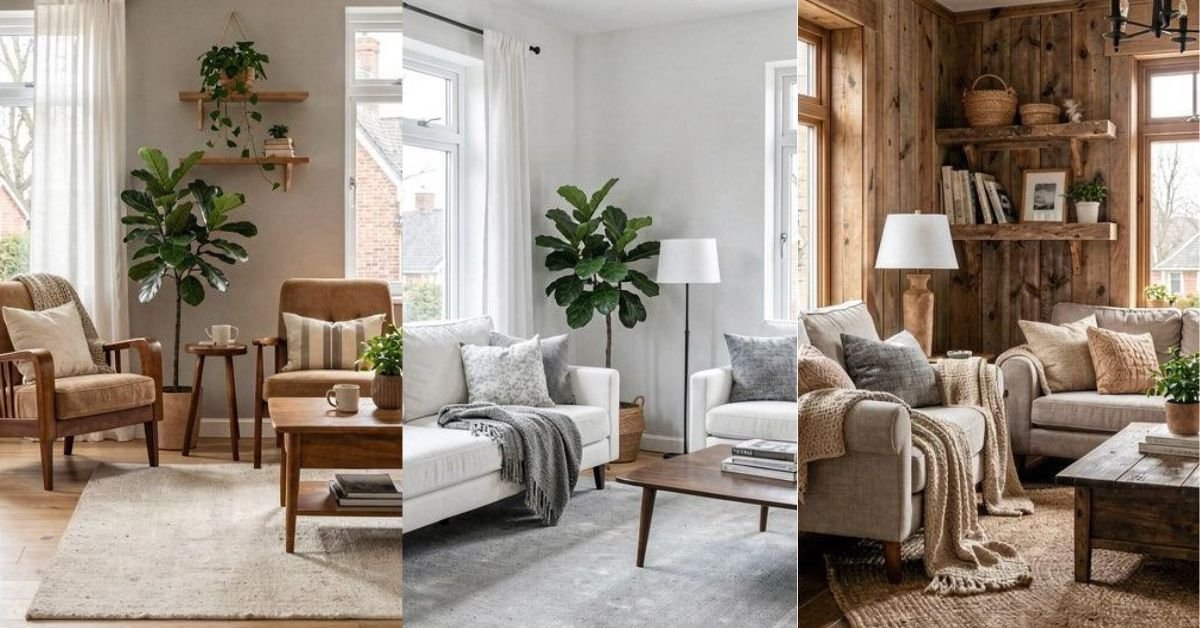
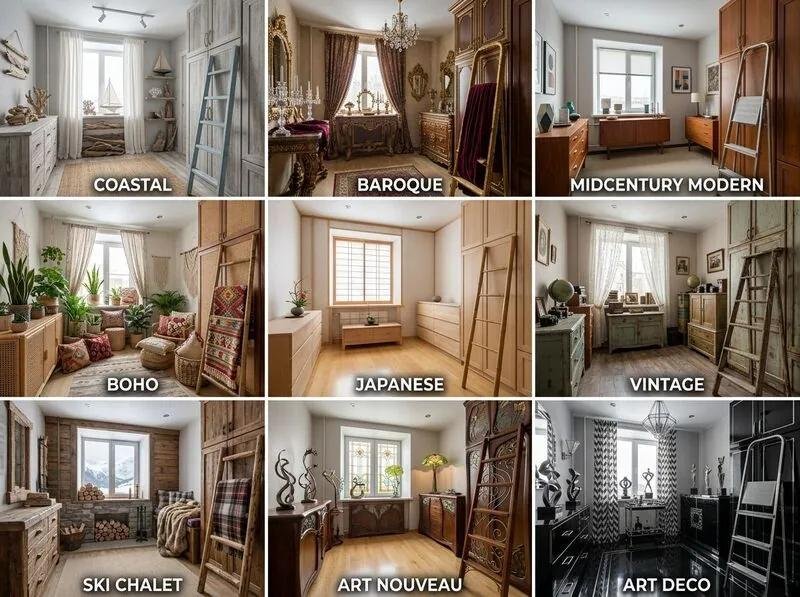
Generally, yes. Modern, Scandinavian, Japandi, traditional, farmhouse, coastal, industrial, contemporary, glam, minimalist, transitional—you can digitally furnish a property in a remarkably wide range of design directions.
That flexibility can be especially useful when you want to present the same property to different audiences.
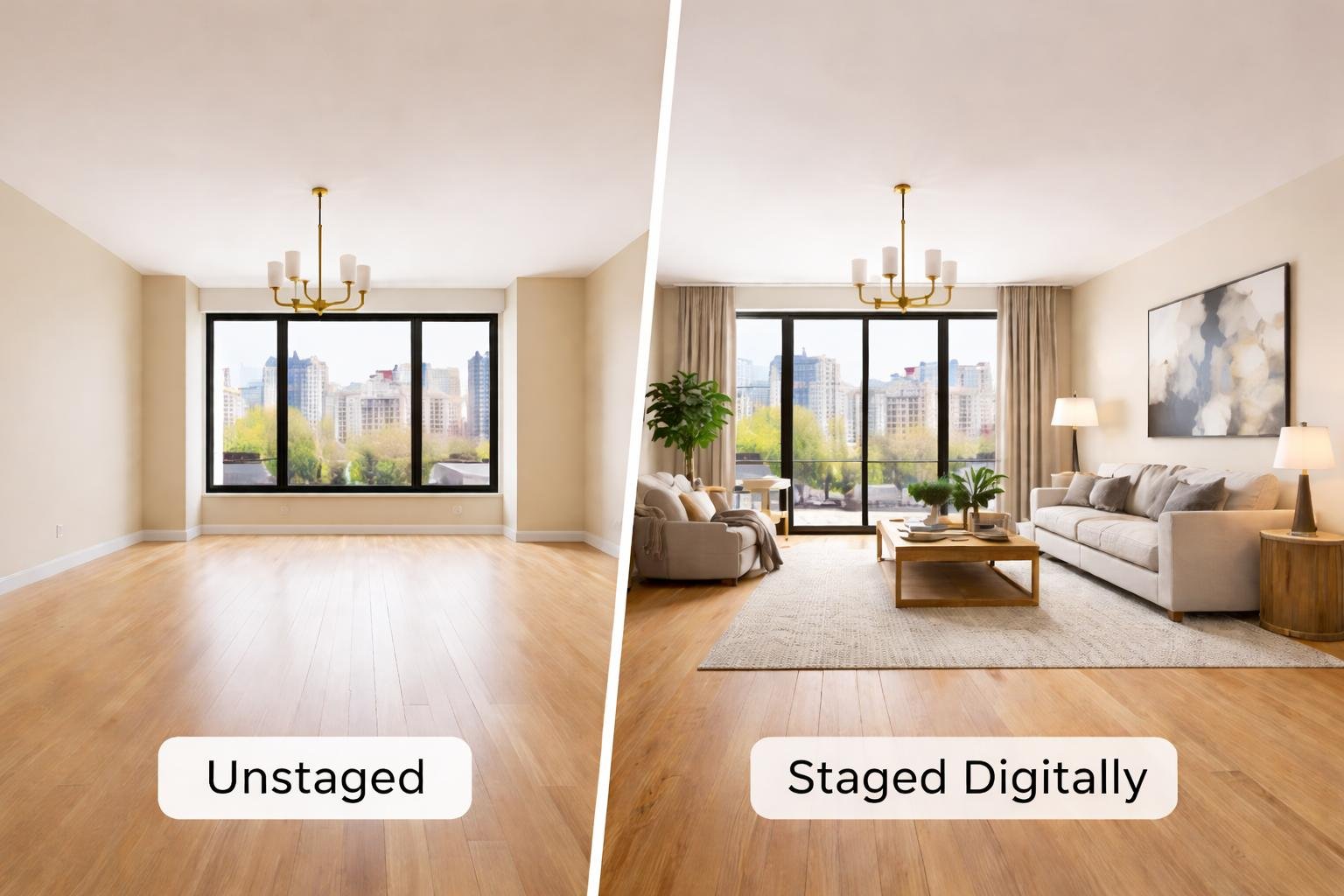
Think of virtual staging as a digital wardrobe for a home. The house stays the same. You simply change the outfit.
And that distinction matters.
Why Interior Style Matters in Real Estate Marketing
A buyer isn’t only evaluating square footage, bedrooms, bathrooms, and location.
They’re also asking themselves a much more emotional question:
“Could I see myself living here?”
The National Association of REALTORS® reported in its 2025 Profile of Home Staging that 83% of buyers’ agents said staging made it easier for buyers to visualize a property as their future home.
That doesn’t mean every property needs elaborate staging.
It means presentation can help bridge the gap between an empty room and a buyer’s imagination.
Interior style plays an important role because different styles communicate different feelings.
A minimalist room can feel clean and spacious. A coastal room can feel relaxed. A traditional room can feel established and comfortable. A luxury design can communicate sophistication.
The architecture hasn’t changed.
The story you’re telling about the space has.
Can Realtors Virtually Stage a Home in Any Interior Style?
This is where virtual staging becomes particularly interesting.
Unlike physical staging, where you’re limited by available furniture, transportation, storage, rental inventories, and installation time, digital staging can offer a much broader design palette.
Depending on the software or service you use, you can request styles such as:
- Modern
- Contemporary
- Minimalist
- Scandinavian
- Japandi
- Coastal
- Farmhouse
- Traditional
- Transitional
- Industrial
- Midcentury Modern
- Glam
- Art Deco
- Bohemian
- Mediterranean
- Luxury
You can also combine characteristics.
For example, instead of simply requesting “modern,” you might specify:
Modern + warm neutral colors + natural wood + soft lighting + minimalist furniture.
That produces a much clearer creative direction.
The important point is that style should support the property rather than overpower it.
If you’re marketing a compact downtown condo, a clean contemporary or Scandinavian treatment may communicate the space effectively.
If you’re marketing a large suburban home with traditional architectural details, a transitional or classic interior may make more sense.
Virtual staging gives you the flexibility to explore those possibilities without physically moving a truckload of furniture into the property.
Match the Interior Style to the Property
Here’s where you need to use judgment.
Just because you can virtually stage a home in any style doesn’t mean every style is appropriate.
Imagine putting ultra-modern furniture into a century-old Victorian home with ornate moldings, hardwood floors, and classic architectural details.
Could you do it?
Probably.
Would it necessarily help the listing?
Not necessarily.
Your goal isn’t to create the most dramatic image possible. Your goal is to help buyers understand the property’s potential.
Look at the Architecture First
Start with the home itself.
Look at:
- Ceiling height
- Flooring
- Windows
- Doors
- Trim
- Fireplaces
- Built-ins
- Kitchen finishes
- Wall colors
- Room proportions
- Natural light
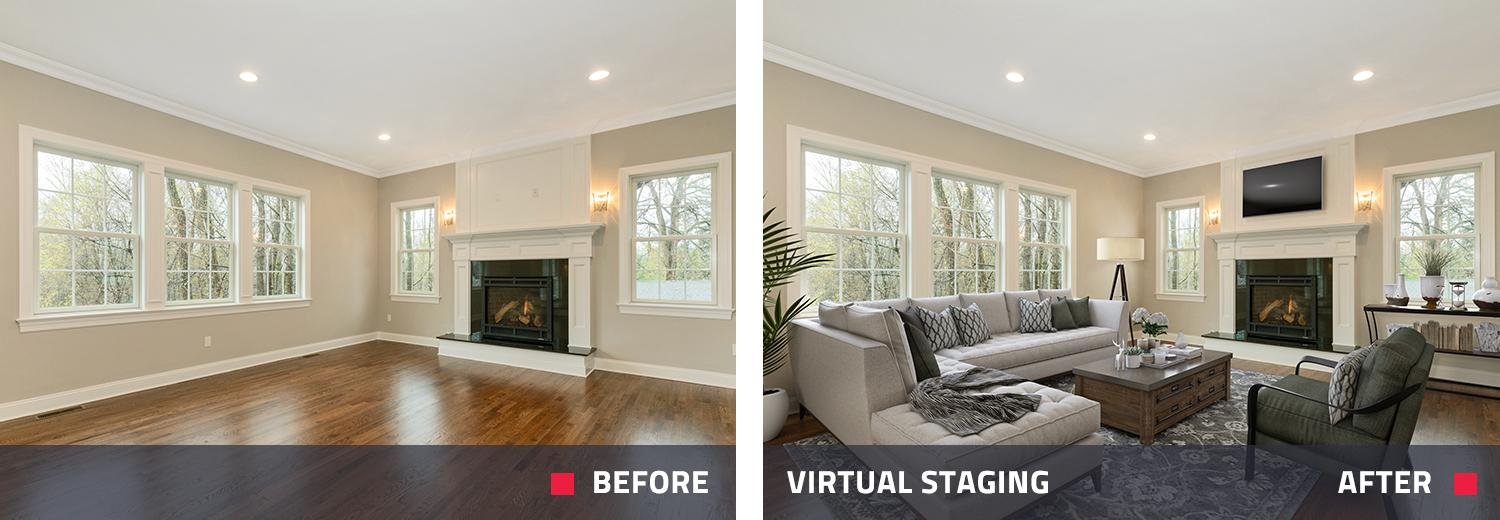
These elements should influence your staging direction.
Architecture is the skeleton of the home. Furniture is the clothing.
You don’t want the clothing fighting with the skeleton.
Consider the Property’s Price Point
A $300,000 starter condo and a $2 million luxury home probably shouldn’t receive exactly the same visual treatment.
That doesn’t mean expensive furniture automatically makes an image better.
Instead, consider proportion, quality, sophistication, and restraint.
Luxury staging often works best when the furniture and accessories look intentional rather than excessive.
Think About the Likely Buyer
Ask yourself:
Who are you trying to help visualize this home?
A young professional may respond differently to a compact contemporary condo than a family searching for a traditional suburban home.
You don’t need to stereotype your buyers. Simply use the property’s location, architecture, layout, and likely market positioning to guide your choices.
Modern Virtual Staging: Clean, Simple and Contemporary
Modern staging is one of the easiest styles to understand visually.
Think:
- Clean lines
- Neutral colors
- Simple furniture
- Minimal decoration
- Natural materials
- Functional layouts
This style can work particularly well for condos, new construction, renovated properties, and homes with contemporary architecture.
But don’t confuse modern with empty.
A room can remain minimalist while still feeling warm and livable.
Add a sofa, coffee table, rug, artwork, plants, and carefully selected accessories.
The goal is balance.
Scandinavian and Japandi Styles
Want something lighter and calmer?
Scandinavian staging often uses:
- Light wood
- Soft neutrals
- Simple furniture
- Natural textures
- Functional design
- Plenty of visual breathing room
Japandi takes a similar appreciation for simplicity but combines Scandinavian functionality with Japanese-inspired restraint and natural materials.
These styles can work particularly well when you want a room to feel peaceful without looking sterile.
For smaller rooms, that can be useful.
Why fill a 12-by-12-foot room with oversized furniture when a carefully selected sofa, chair, table, and rug can demonstrate the space much more effectively?
Coastal, Farmhouse and Traditional Styles
Not every property needs a sleek contemporary look.
A coastal style can introduce light colors, natural textures, and relaxed furniture.
Farmhouse staging can create a comfortable, approachable atmosphere through wood, textiles, and practical furniture.
Traditional staging can emphasize symmetry, classic furniture shapes, richer materials, and a more established appearance.
The key is moderation.
You don’t need seashells everywhere to communicate “coastal.”
You don’t need a barn door in every room to communicate “farmhouse.”
A few carefully selected design cues can be enough.
Luxury, Glam and Art Deco
Now let’s move in the opposite direction.
Suppose you’re marketing an upscale property.
You may want a more dramatic visual language.
Luxury staging might include sophisticated furniture, elegant lighting, premium-looking materials, and carefully controlled accessories.
Glam staging can introduce metallic accents, richer fabrics, statement lighting, and more decorative elements.
Art Deco can go even further with geometric shapes, strong contrasts, elegant furniture, and distinctive decorative details.
But here’s an important rule:
Luxury does not mean clutter.
In fact, luxury marketing often benefits from restraint.
Give the furniture room to breathe.
Let the architecture remain visible.
Make the room feel expensive without making it look like a furniture showroom.
Don’t Let Virtual Staging Change the Actual Property
This is perhaps the most important practical rule.
Virtual staging should help buyers visualize the property—not create a different property.
Keep the original:
- Walls
- Windows
- Doors
- Stairs
- Room dimensions
- Walkways
- Kitchen layout
- Cabinets
- Built-ins
- Architectural features
If the original room has a doorway in the left corner, don’t digitally move it to the right.
If a window is narrow, don’t make it enormous because it looks better.
If the kitchen has a particular cabinet configuration, don’t redesign it simply because another arrangement photographs better.
The National Association of REALTORS® says REALTORS® should present a true picture in advertising and marketing, and its Code specifically addresses misleading images and Internet content.
NAR’s consumer guidance also notes that virtual staging can digitally add furniture and décor, while material alterations should be disclosed so buyers receive a true picture of the home.
In other words, use virtual staging to decorate the canvas—not redraw the canvas.
Use Different Styles to Test Different Marketing Ideas
Here’s one of the most useful things you can do as a Realtor.
Don’t necessarily stop at one design concept.
Suppose you have an empty living room.
You could create:
Version A: Contemporary
Version B: Scandinavian
Version C: Modern Luxury
The room itself stays identical.
Only the furniture, décor, and design direction change.
This gives you a way to see which presentation best communicates the property’s character.
You could also use different styles for different rooms.
For example:
- Living room — contemporary
- Primary bedroom — warm minimalist
- Home office — Japandi
- Basement — modern family room
The key is maintaining enough visual consistency that the home still feels like one property.
Virtual Staging Can Help Define Awkward Spaces
Have you ever looked at a strange little room in a listing and wondered:
“What is this supposed to be?”
Buyers may wonder the same thing.
A virtually staged image can provide an answer.
An unusually shaped room could become a home office.
A large landing could become a reading area.
An empty basement corner could become a children’s play area.
A narrow room could demonstrate a practical workspace.
This doesn’t mean you should falsely label the room.
Instead, you’re helping buyers understand one possible use.
NAR notes that staging can help buyers envision themselves living in the property and can be particularly useful for defining spaces.
Think of it as giving buyers a visual suggestion rather than an instruction.
Combine Virtually Staged Images With Original Photos
Should every photograph be virtually staged?
Not necessarily.
In many cases, a combination can create a stronger and more transparent listing presentation.
You might show:
- Original photograph
- Virtually staged version
- Additional original photograph
- Another virtually staged room
This gives buyers both reality and possibility.
The original image shows what exists.
The staged image shows how the space could function.
That’s a powerful combination.
And it prevents your marketing from becoming a visual magic trick.
The buyer should understand the difference between what is physically there and what has been digitally added.
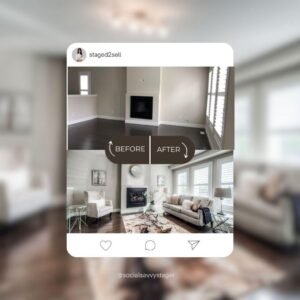 Turn Different Interior Styles Into Social Media Content
Here’s another opportunity Realtors sometimes overlook.
Your virtual staging images aren’t only listing assets.
They can become content.
Imagine posting:
“Which design would you choose?”
Then show the same living room in three different styles.
Or create a before-and-after:
Empty Room → Modern Living Room
Or create an educational post:
“3 Ways I Help Buyers Visualize an Empty Home.”
Now you’re not simply promoting a house.
You’re demonstrating your marketing expertise.
That’s personal branding in action.
A Simple Workflow for Realtors
You don’t need a complicated system.
Try this five-step process.
Step 1: Identify the Room
Start with vacant, awkward, outdated, or visually weak spaces.
Step 2: Study the Property
Look carefully at architecture, dimensions, lighting, flooring, windows, doors, and existing finishes.
Step 3: Choose the Style
Select a design direction that complements the property and likely buyer audience.
Step 4: Review the Result
Check furniture scale, shadows, perspective, lighting, architecture, and realism.
Step 5: Repurpose the Image
Use the final image where appropriate:
- Listing
- Website
- Social media
- Email marketing
- Listing presentation
- Realtor portfolio
- Before-and-after content
One carefully created image can become multiple pieces of marketing content.
7 Practical Tips for Using Virtual Staging Interior Styles
Keep these seven rules beside you when preparing your next listing:
1. Start with the architecture.
Let the home’s existing features guide the design.
2. Don’t automatically choose the trendiest style.
A timeless design can sometimes communicate the property better.
3. Keep furniture proportional.
A huge sectional can make a room look smaller instead of larger.
4. Use color strategically.
Neutral doesn’t have to mean boring.
5. Don’t overdecorate.
A few strong pieces can communicate more than twenty accessories.
6. Preserve the actual floor plan.
Never let digital staging distort the property’s layout.
7. Show possibilities without creating false expectations.
Your objective is visualization, not illusion.
How Can You Tell if Your Virtual Staging Is Working?
Don’t judge your staging only by whether you personally like the image.
Look at the marketing response.
Depending on the platforms and tools you use, track:
- Listing views
- Photo engagement
- Saves
- Inquiries
- Showing requests
- Social-media engagement
- Website traffic
You can also compare different approaches over multiple listings.
Does a contemporary style generate more engagement for your condo listings?
Do warmer interiors work better for family homes?
Do before-and-after posts generate more social interaction than ordinary listing photographs?
You may discover patterns specific to your market and audience.
Remember, NAR’s 2025 staging survey found that buyers’ agents placed significant importance on listing photos, with 73% saying having photos available was much more or more important to their clients.
The lesson isn’t that staging guarantees results.
It’s that your visual presentation deserves deliberate attention.
Frequently Asked Questions
1. Can virtual staging be done in multiple interior styles?
Yes. Depending on the software or service, you can create many different design directions, including modern, contemporary, Scandinavian, Japandi, coastal, farmhouse, traditional, transitional, industrial, glam, and luxury styles.
2. Should Realtors choose the same virtual staging style for every listing?
No. Your staging should generally respond to the property’s architecture, location, price point, condition, and likely audience. Consistency in your marketing process is useful, but every home doesn’t need identical furniture.
3. Can virtual staging make a small room look larger?
It can help demonstrate an appropriate furniture arrangement and make the room easier to understand, but it should not digitally change the room’s actual dimensions. Oversized furniture can actually make a small room appear smaller.
4. Is it better to use one interior style throughout a property?
Usually, you want reasonable visual consistency from room to room. However, different rooms can have different functions and subtle design variations. The home should still feel cohesive rather than like a collection of unrelated showrooms.
5. Do Realtors need to identify virtually staged images?
Requirements can vary by MLS, brokerage, jurisdiction, and advertising rules. You should follow the applicable requirements for your market. NAR’s Code of Ethics requires REALTORS® to present a true picture in advertising and marketing and prohibits misleading images.
Conclusion
So, can Realtors virtually stage a home in any interior style?
In practical terms, virtual staging gives you an enormous range of design possibilities. You can present a property as modern, minimalist, Scandinavian, Japandi, coastal, traditional, farmhouse, industrial, glamorous, luxurious, or something in between.
But don’t confuse creative freedom with unlimited alteration.
The best virtual staging doesn’t make buyers say, “Wow, what an amazing digital image.”
It makes them say, “I can actually see myself living there.”
That’s the real goal.
Use style as a storytelling tool. Match the design to the property. Keep furniture realistic. Protect the original architecture. Show buyers what is real and what has been digitally added.
Then take that polished image beyond the listing.
Put it on your website. Use it in your social media. Include it in your listing presentation. Build before-and-after content around it. Let it demonstrate the thought and marketing expertise you bring to every property.
Your listing doesn’t need to look like everyone else’s.
With the right virtual staging strategy, you can show buyers not only what the home looks like—but what living there could feel like.